
 English
 Español
 Français
 العربية


laboratory handsheet maker
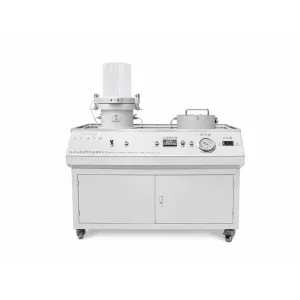
A laboratory handsheet maker is a specialized piece of equipment used in paper and pulp testing to prepare uniform sheets of paper under controlled laboratory conditions. It is widely applied in research institutions, quality control laboratories, and educational settings where accurate and repeatable sheet formation is required. The main purpose of this machine is to simulate the paper-making process on a small scale, allowing users to evaluate the properties of pulp fibers, additives, recycled materials, and other raw materials before they are used in full-scale production.The laboratory handsheet maker is designed to produce handsheets with consistent thickness, weight, and formation quality. These sheets are essential for testing a wide range of paper characteristics, including tensile strength, burst strength, tear resistance, brightness, opacity, smoothness, and absorbency. By using standardized procedures, the equipment helps ensure that test results are reliable and comparable. This makes it an important tool for product development, process optimization, and raw material assessment in the paper industry.Typically, the machine consists of a forming unit, a drainage system, a pressing section, and a drying section. First, a prepared pulp suspension is poured into the forming chamber, where water is drained through a screen to form a wet sheet. Next, the wet sheet is transferred to a pressing stage to remove excess water and improve sheet integrity. Finally, the sheet is dried under controlled conditions to obtain a finished handsheet suitable for further testing. Some models are equipped with automatic control systems to improve efficiency and reduce operator variation, while others are manual for simpler operation and lower cost.One of the major advantages of a laboratory handsheet maker is its ability to create reproducible samples from very small amounts of pulp. This is especially useful when materials are limited or when multiple formulations must be compared quickly. The equipment helps researchers study how fiber length, refining level, chemical treatment, or filler content affects paper performance. It also plays an important role in recycling research, enabling the evaluation of recovered fibers and new paper blends.In addition, the laboratory handsheet maker is valued for its ease of use and adaptability. It can handle different pulp types, including virgin pulp, recycled pulp, and specialty fibers. Many units are built with corrosion-resistant materials to ensure durability and long service life. Their compact size makes them suitable for benchtop use, saving space in laboratories.Overall, a laboratory handsheet maker is an essential instrument for anyone involved in paper testing and development. It provides a practical and efficient way to produce standardized paper samples, support scientific analysis, and improve product quality.
продукт
классификация:
-
Листовой формирователь
Их классификация: Pulp Preparation & Sheet Forming Equipmentмнения: 349номер:Время выпуска: 2026-06-03 13:51:28Машина для формования листов — это многофункциональное лабораторное устройство, разработанное в соответствии со стандартом ISO 5269/2 и соответствующими стандартами, объединяющее формовку листов, вакуумную фильтрацию, прессование и сушку в одном блоке для производства стандартных листов диаметром 200 мм. Изготовленный из нержавеющей стали 304 с силиконовыми прокладками и вакуумным насосом с водяной циркуляцией, он предлагает пневматический и ручной режимы смешивания. Встроенная нагревательная пластина обеспечивает однородность и консистенцию листа, что делает его идеальным для исследований и разработок целлюлозы, контроля качества и формования специальных волокон методом мокрой укладки.
новости
классификация:
Нет результатов поиска!
случай
классификация:
Нет результатов поиска!
видео
классификация:
Нет результатов поиска!
скачать
классификация:
Нет результатов поиска!
вербовка
классификация:
Нет результатов поиска!
Рекомендуемые продукты
-
NEWS
Листовой формирователь
Узнать больше



 телефон