
 English
 Español
 Français
 العربية


laboratory pulp classifier
A laboratory pulp classifier is a specialized piece of equipment used in paper and pulp testing to separate pulp fibers according to their length, quality, and degree of refinement. It is widely applied in research laboratories, quality control departments, and educational institutions involved in papermaking, fiber analysis, and material development. The main purpose of this instrument is to simulate the classification process of pulp in a controlled environment, allowing technicians and researchers to evaluate how different fiber fractions affect paper strength, formation, drainage, and final product performance.The working principle of a laboratory pulp classifier is based on mechanical separation through perforated or slotted screens. When a diluted pulp suspension is introduced into the device, the fibers are agitated and forced to pass through classification elements with specific opening sizes. Short fibers, fines, and small particles can pass through the screen openings, while longer fibers and larger bundles are retained. This separation makes it possible to determine the proportion of different fiber fractions in a pulp sample and to study how refining, pulping conditions, or raw material type influence fiber distribution.A typical laboratory pulp classifier is designed for accuracy, repeatability, and ease of operation. It usually includes a feed tank, classification chamber, screening plates or slots, circulation system, collection containers, and a control panel. Some models are equipped with adjustable speed, timer settings, and interchangeable screens to meet different testing standards and experimental requirements. The equipment is generally made from corrosion-resistant materials to ensure long service life and stable performance under frequent use with water-based fiber suspensions.In practical use, the sample pulp is first prepared at a suitable consistency and then poured into the classifier. Water flow and mechanical movement create a uniform environment that helps separate fibers efficiently. After the process, the retained and passed fractions are collected, dried if necessary, and weighed for analysis. The resulting data can be used to calculate classification efficiency, fiber yield, and the percentage of rejects or accepted fibers. These results are important for understanding pulp behavior and optimizing papermaking processes.Laboratory pulp classifiers are essential in many testing applications. They are used to compare different raw materials such as wood pulp, recycled pulp, and non-wood pulp. They also help evaluate refining effects, screen performance, and fiber quality changes during processing. In research and development, the classifier supports the creation of new paper grades and improves consistency in production. In quality control, it provides reliable data for monitoring pulp properties and ensuring product stability.One of the major advantages of a laboratory pulp classifier is its ability to provide reproducible results with relatively small sample volumes. It saves time and material while delivering meaningful information for technical decisions. With proper maintenance and calibration, the equipment can offer accurate and dependable performance over long periods. Its compact structure, simple operation, and strong analytical value make it an important tool in modern pulp and paper laboratories.Overall, a laboratory pulp classifier plays a key role in fiber analysis and paper research. It helps users understand pulp composition, improve process control, and support the development of higher-quality paper products.
продукт
классификация:
-
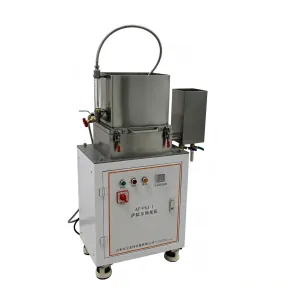
Стандартный экран Сомервилля
Их классификация: Pulp Preparation & Sheet Forming Equipmentмнения: 333номер:Время выпуска: 2026-06-03 16:08:55Стандартное сито Somerville — это лабораторное устройство для просеивания пульпы, изготовленное в соответствии с TAPPI T275. Он использует вертикальное колебание сита с прорезями для отделения и количественного определения примесей, таких как липкие вещества, пластик, песок и металлические частицы, из пульпы. Стандартная щель экрана 0,3 мм, 756 щелей, амплитуда 3,2±0,1 мм, рабочая скорость 690-700 об/мин. Это важно для стандартизированной оценки чистоты целлюлозы в бумажных лабораториях.
новости
классификация:
Нет результатов поиска!
случай
классификация:
Нет результатов поиска!
видео
классификация:
Нет результатов поиска!
скачать
классификация:
Нет результатов поиска!
вербовка
классификация:
Нет результатов поиска!
Рекомендуемые продукты
-
NEWS
Стандартный экран Сомервилля
Узнать больше



 телефон