
 English
 Español
 Français
 العربية


PFI beater
A PFI beater is a key piece of equipment used in the paper and pulp industry to improve the physical properties of pulp fibers during the refining process. It plays an essential role in preparing pulp for paper production by mechanically treating fibers in a controlled and repeatable way. The machine is widely used in laboratories and pilot plants to evaluate how pulp will behave during industrial paper making, helping manufacturers predict strength, bonding, drainage, and overall sheet quality.The basic function of a PFI beater is to refine pulp by applying pressure and friction between a rotating roll and a stationary housing. As the pulp suspension is processed, the fibers are cut, crushed, fibrillated, and otherwise modified. This controlled treatment increases fiber flexibility and surface area, which can improve fiber bonding when the pulp is later formed into paper sheets. The result is often stronger, denser, and more uniform paper with improved mechanical performance.One of the main advantages of a PFI beater is its ability to provide standardized and reproducible refining results. Unlike large industrial refiners, which may vary depending on operating conditions, a PFI beater is designed for consistent laboratory testing. This makes it especially useful for research and quality control. Engineers and technicians can compare different pulps, chemical treatments, or refining conditions using the same equipment and procedures, allowing accurate analysis of how each variable affects paper properties.A PFI beater is commonly used to study different types of pulp, including hardwood, softwood, recycled fibers, and specialty pulps. It can help determine the ideal refining level needed for a specific product, whether the goal is high strength, better formation, improved smoothness, or optimal drainage. Because paper grades have different performance requirements, the ability to fine-tune refining conditions is valuable in both development and production planning.In operation, the machine typically includes a stainless-steel chamber, a beater roll, a trough, and control mechanisms for speed, pressure, and running time. Pulp is placed in the chamber with a measured amount of water, and the beater roll processes the fibers for a set number of revolutions. The simplicity of the design makes the equipment easy to operate while still delivering precise and meaningful results.Another important feature of the PFI beater is its contribution to research and product innovation. By observing how fibers respond to mechanical action, scientists can develop new paper formulations, optimize refining energy, and reduce production costs. The data obtained from PFI beating tests is often used to support larger scale process decisions and improve the efficiency of paper manufacturing.Overall, a PFI beater is an essential laboratory refining instrument that helps transform raw pulp into a more suitable material for paper production. Its controlled action, repeatable performance, and ability to reveal fiber behavior make it a valuable tool for testing, development, and quality assurance in the pulp and paper industry.
продукт
классификация:
-
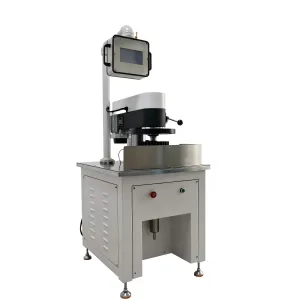
Интеллектуальный битер PFI
Их классификация: Pulp Preparation & Sheet Forming Equipmentмнения: 268номер:Время выпуска: 2026-06-03 16:03:58Интеллектуальная взбивальная машина PFI — это стандартное лабораторное устройство для исследований по взбиванию целлюлозы. Он применяет сдвиговое воздействие между вращающимся валком и неподвижным корпусом для измельчения волокон. Цилиндрический корпус имеет внутренний диаметр 250 мм с валком 200 мм, зазор регулируется в диапазоне 0-25 мм. В рулонном подъемнике используется полностью автоматическое вертикальное позиционирование с помощью сенсорного экрана. Рабочая скорость 1490±10 об/мин, консистенция взбивания 5-20% (оптимально 10%) и вместимость 5-30 граммов сухого жома. Изготовленное из нержавеющей стали и соответствующее стандарту ISO 5264/2, оно является основным оборудованием для исследований в области измельчения целлюлозы.
новости
классификация:
Нет результатов поиска!
случай
классификация:
Нет результатов поиска!
видео
классификация:
Нет результатов поиска!
скачать
классификация:
Нет результатов поиска!
вербовка
классификация:
Нет результатов поиска!
Рекомендуемые продукты
-
NEWS
Интеллектуальный битер PFI
Узнать больше



 телефон