
 English
 Español
 Français
 العربية


pore size tester
A pore size tester is an instrument used to measure the size, distribution, and characteristics of pores within a material. It is widely applied in laboratories and industrial quality control because pore structure has a direct impact on performance, permeability, filtration efficiency, strength, and product consistency. Materials such as membranes, filters, textiles, paper, ceramics, nonwovens, foams, and other porous substances often require accurate pore size analysis to ensure they meet technical requirements.The basic principle of a pore size tester is to evaluate how fluids or gases pass through a porous sample under controlled conditions. By observing the pressure, flow rate, or bubble point behavior, the instrument can determine the largest pore, mean pore size, or pore size distribution. Different testing methods may be used depending on the material and application. Common approaches include bubble point testing, capillary flow porometry, and gas-liquid displacement methods. Each method provides valuable information about the internal structure of porous materials.A pore size tester usually consists of a sample holder, pressure control system, fluid supply system, sensors, and data analysis software. The sample is placed in the testing chamber, then a liquid or gas is introduced gradually. As pressure increases, the fluid begins to pass through the pores. The system records the changes and calculates pore-related parameters based on scientific formulas. Modern instruments often feature digital operation, automatic data collection, and clear output reports, making the testing process efficient and reliable.One of the major advantages of a pore size tester is its ability to provide precise and repeatable results. This is especially important in industries where pore structure affects product function. For example, in filtration materials, pore size determines how effectively particles are removed from liquids or air. In membranes, it influences separation accuracy and flow rate. In absorbent materials, pore structure affects liquid retention and transport. In building materials and ceramics, it can impact durability, density, and insulation performance.A pore size tester is also valuable for research and development. Engineers and scientists can use it to study how material composition, processing conditions, or treatment methods affect pore formation. This helps improve product design and optimize manufacturing processes. By comparing test results, users can identify the best material formulations and achieve consistent quality control.In addition, the instrument supports international testing standards and can be adapted to different sample types and sizes. Its versatility makes it suitable for a wide range of applications in environmental protection, medical materials, chemical processing, and advanced manufacturing.In summary, a pore size tester is an essential tool for analyzing porous materials. It provides accurate measurement, supports quality assurance, and helps improve product performance across many industries.
продукт
классификация:
-
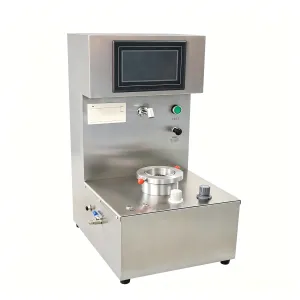
Цифровой тестер размера пор
Их классификация: Filter Paper & Media Testing Instrumentsмнения: 684номер:Время выпуска: 2026-06-04 17:03:52Цифровой тестер размера пор (стенд для определения точки пузырька) представляет собой анализатор размера пор фильтрующего материала, разработанный в соответствии со стандартами GB/T 2679.14-1996 и GB/T 1967-1996. Он измеряет максимальный и средний размер пор фильтровальной бумаги, сепараторов из стекловолокна, текстильных материалов и различных спеченных материалов. Оснащенный сенсорным экраном, температурной компенсацией и встроенным микропринтером, он имеет максимальный диапазон давления 15 кПа, диапазон измерения размера пор 5–500 мкм и разрешение дисплея 0,1 мкм. Дополнительная испытательная камера для фильтрующих картриджей расширяет возможности тестирования фильтрующих элементов, что делает ее профессиональным инструментом для исследований и разработок фильтрующих материалов, а также контроля качества.
новости
классификация:
Нет результатов поиска!
случай
классификация:
Нет результатов поиска!
видео
классификация:
Нет результатов поиска!
скачать
классификация:
Нет результатов поиска!
вербовка
классификация:
Нет результатов поиска!
Рекомендуемые продукты
-
NEWS
Цифровой тестер размера пор
Узнать больше



 телефон