
 English
 Español
 Français
 العربية


Bekk smoothness tester
A smoothness tester is a precision instrument used to evaluate the surface smoothness or texture of paper, cardboard, films, and other sheet materials. It is widely used in quality control, manufacturing, research, and packaging industries to ensure that materials meet the required standards for printing, converting, laminating, coating, and other downstream processes. Surface smoothness is an important property because it directly affects ink transfer, appearance, friction, and overall product performance.The working principle of a smoothness tester is based on measuring the resistance of air flow or the contact behavior between the test surface and a standardized measuring head. In the most common method, a known vacuum or pressure is applied to pull a specific volume of air through the gap between the sample surface and a measuring ring or plate. A smoother surface allows less air leakage and produces a different reading compared with a rougher surface. The result is then converted into a smoothness value, which helps operators compare materials and judge their quality.This instrument is generally designed with a stable frame, a sample clamping system, a measuring head, a vacuum or pressure control unit, and a display or data output interface. The sample must be placed flat and firmly on the test area to avoid errors caused by wrinkles, dust, or uneven positioning. Accurate testing depends on proper sample preparation, consistent operating conditions, and regular calibration of the device. Many modern models include digital controls, automatic timing functions, and memory storage, which improve efficiency and reduce human error.A smoothness tester is especially useful for paper producers, printing companies, and packaging material suppliers. In the printing industry, for example, smoother paper usually provides better dot reproduction, more uniform ink coverage, and higher print quality. In packaging, surface smoothness can influence coating adhesion, sealing performance, and the overall look of the final product. Because of this, smoothness testing is an essential step in both product development and routine inspection.When using the instrument, operators typically select the appropriate test pressure or range, place the sample carefully, start the measurement, and record the result. Multiple tests are often performed on different areas of the same sample to obtain an average value. This improves reliability and helps identify variations across the material surface. For best performance, the instrument should be kept clean, protected from vibration, and maintained according to the manufacturer’s instructions.Overall, a smoothness tester is a valuable laboratory and production tool for evaluating surface quality. It provides objective, repeatable data that supports quality assurance and process control. By helping manufacturers monitor and improve material smoothness, it contributes to better printing results, more consistent product performance, and higher customer satisfaction.
продукт
классификация:
-
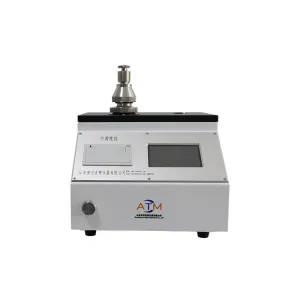
Автоматический тестер гладкости
Их классификация: Paper Testing Instrumentsмнения: 448номер:Время выпуска: 2026-06-04 16:42:32Автоматический тестер гладкости AT-QPH — это модернизированная версия AT-PH-1, работающая по принципу Бекка для измерения гладкости поверхности бумаги и картона. Он использует датчик давления для подачи стандартного давления 100 ± 2 кПа, заменяя традиционный рычаг и весовой механизм. Имея испытательную зону 10±0,05 см² и диапазон измерения 1–99999 с в трех диапазонах автоматического переключения, он оснащен импортным безмасляным вакуумным насосом для работы без обслуживания и 7-дюймовым цветным сенсорным экраном для тестирования одним касанием. Он соответствует стандартам GB/T 456, JJG 62 и ISO 5627. -
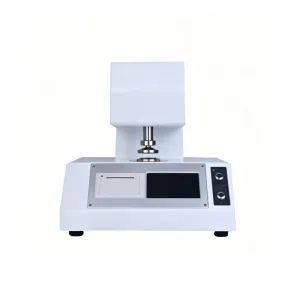
Automatic Smoothness Tester
Их классификация: Paper Testing Instrumentsмнения: 227номер:Время выпуска: 2026-08-06 11:37:13The Automatic Smoothness Tester is an upgraded version of the AT-PH-1, a newly designed intelligent instrument for testing the smoothness of paper and paperboard based on the internationally accepted Bekk smoothness principle. In its mechanical design, the traditional lever and weight manual pressure application structure has been eliminated, replaced by a high-precision pressure sensor that applies a standard pressure of 100±0.5kPa, significantly reducing the instrument's size and weight while providing more precise pressure. The test area is 10±0.05 cm², with a measuring range of 1-99999 seconds divided into three automatically switched ranges. A stepper motor drives the pressing mechanism, ensuring smooth and impact-free operation that eliminates specimen damage common with traditional structures. The instrument features a large color touchscreen with an intuitive interface and one-touch testing without manual pressure setting. A built-in thermal printer is standard, with an optional RS232 interface. An imported oil-free vacuum pump requires lifelong zero maintenance. This instrument is used for determining the surface smoothness of paper and paperboard and is an ideal testing device for the papermaking, packaging, printing, commodity inspection, and scientific research sectors, compliant with GB/T 456, JJG 62, and ISO 5627 standards.
новости
классификация:
-
[industry news]How Do You Test the Smoothness of Paper? - Bekk Method Princ...
2026-07-21 16:06:55
случай
классификация:
Нет результатов поиска!
видео
классификация:
Нет результатов поиска!
скачать
классификация:
Нет результатов поиска!
вербовка
классификация:
Нет результатов поиска!
Рекомендуемые продукты
-
NEWS
Автоматический тестер гладкости
Узнать больше



 телефон